Reduce the Risk of Material Weaknesses With Stronger Controls
Key takeaways
- Material weaknesses in tax often stem from manual spreadsheet errors, weak version control, and lack of audit trails.
- Adding manual controls does not solve governance gaps – enterprise tax functions require controlled, system-based workflows.
- Automated, connected systems provide real-time visibility, enforce controls, and create audit-ready documentation.
For publicly traded companies and larger private organizations with lender or investor reporting obligations, a material weakness in internal controls over financial reporting carries serious consequences.
It triggers disclosure requirements, restatement risk, and heightened scrutiny from auditors, investors, and regulators.
Avoiding a material weakness is a priority for corporate tax leaders, while at the same time, pressures on the tax department continue to intensify. Tax professionals are increasingly expected to act as strategic partners while also managing growing organizational complexity, keeping pace with constant regulatory change, and delivering faster, more data-driven insights.
This article focuses on one of the most critical imperatives for today’s tax function: strengthening controls and audit readiness to prevent material weaknesses.
To read more about how corporate tax leaders can rise to the occasion, download From Pressure to Performance: How Modern Tax Leaders Solve Three Defining Challenges.
What can cause a material weakness?
Material weaknesses in the tax area often trace back to the limitations of manual, spreadsheet-based processes.
Some of the key issues that lead to increased risk are:
Spreadsheet errors
A 2024 study published in Frontiers of Computer Science found that 90% of spreadsheets used in financial reporting contain errors. Formula errors, broken cell references and hardcoded values are common sources of financial reporting risk.
Version control deficiencies
Without a governed system, multiple versions of the same workpaper often circulate simultaneously, creating ambiguity about which one contains authoritative calculations.
Inadequate documentation
Manual processes rarely produce the structured documentation necessary to demonstrate that the tax team prepared and reviewed calculations in accordance with established procedures.
Inconsistent rate and law application
Without automated rate updates tied to authoritative sources, tax professionals must manually identify and apply rate changes. This process is prone to omissions across large entity populations.
Weak or absent audit trail
Without time-stamped, cell-level change history, reconstructing how a given calculation was produced is difficult or impossible. Audit defensibility requires exactly that.
Use our practical self-assessment designed to help teams evaluate how strong their tax process controls really are – especially around documentation, data, and audit readiness.
The frustration: The limitations of general-use spreadsheets
A common response to control deficiencies in the tax function is to introduce additional manual controls: more review steps, additional sign-off documentation, and more elaborate Excel spreadsheets. This approach addresses the symptoms but not the causes. The fundamental problem isn’t that spreadsheets aren’t complex enough. It’s that Excel, by its nature, isn’t designed to serve a governed financial system.
Enterprise tax functions require controlled systems with defined access permissions, entity-level visibility into process statuses, systematic version tracking, and audit defensibility at every level of the calculation.
AI-enhanced Excel spreadsheets with formulas that draw on external data or have automated summaries layered over existing workbooks improve the efficiency of individual tasks. But they don’t address the governance gaps that give rise to material weaknesses.
Consolidations, entity structures, audit trails, controls, workflows, and versioning require governed systems, not just smarter cells.
The solution: Automated controls designed for audit readiness
Addressing audit risk requires more than incremental fixes – it demands a shift to systems purpose-built for control, transparency, and consistency.
The Bloomberg Tax Suite of Solutions creates a connected environment where tax data flows seamlessly between processes.
This integrated approach replaces fragmented, manual workflows with automated controls, real-time visibility, and complete audit trails, helping tax teams standardize processes, reduce errors, and demonstrate compliance with confidence.
Bloomberg Tax can help teams embrace proactive tax documentation strategies to stay compliant while avoiding audit exposure and delayed filings.
Dive deeper into the strategies transforming the tax function – access the full report, From Pressure to Performance: How Modern Tax Leaders Solve Three Defining Challenges.
Workpapers: Cell-level governance
Bloomberg Tax Workpapers provides a control architecture suited to SOX compliance. Cell-level change tracking records every modification to a workpaper calculation, capturing who made the change and when, providing the audit trail external auditors require.
Multi-level sign-offs support structured review workflows, recording preparers and reviewers at the cell and workpaper levels. Once a workpaper is finalized, it locks to read-only status.
Any subsequent changes are automatically flagged, notifying the review team before they’re incorporated into the final calculation.
A global dashboard gives tax leaders real-time visibility into workpaper status across the team, allowing for proactive identification of bottlenecks before they affect the close.
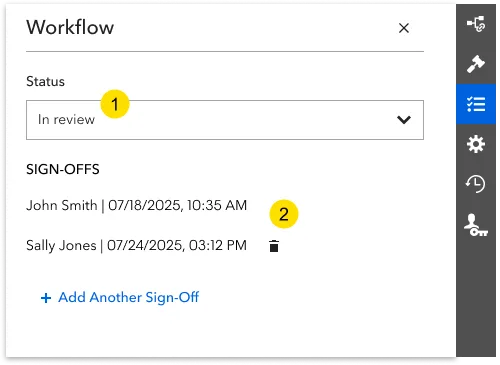
Increase transparency with documented workflows, version control, and workpaper signoffs with Bloomberg Tax Workpapers.
Provision: A closed system built for audit confidence
Bloomberg Tax Provision is a closed double-entry system, meaning it captures and reconciles every balance sheet movement within the calculation. This approach is consistent with ASC 740’s prescribed balance sheet method for accounting for income taxes.
It also ensures rate reconciliations tie from the outset, eliminating manual reconciliation steps that are a common source of errors and audit friction.
The system maintains a complete, time-stamped audit trail of every change to the provision. Jurisdiction-by-jurisdiction calculations provide the detailed information needed for internal review and external audit, while exported footnote reports retain formulas for auditor reference, facilitating a smoother, more transparent audit process.
Internal control functionality allows tax departments to document and demonstrate that they prepared and reviewed the provision in accordance with established procedures. This is a critical capability for organizations subject to SOX Section 404 requirements.
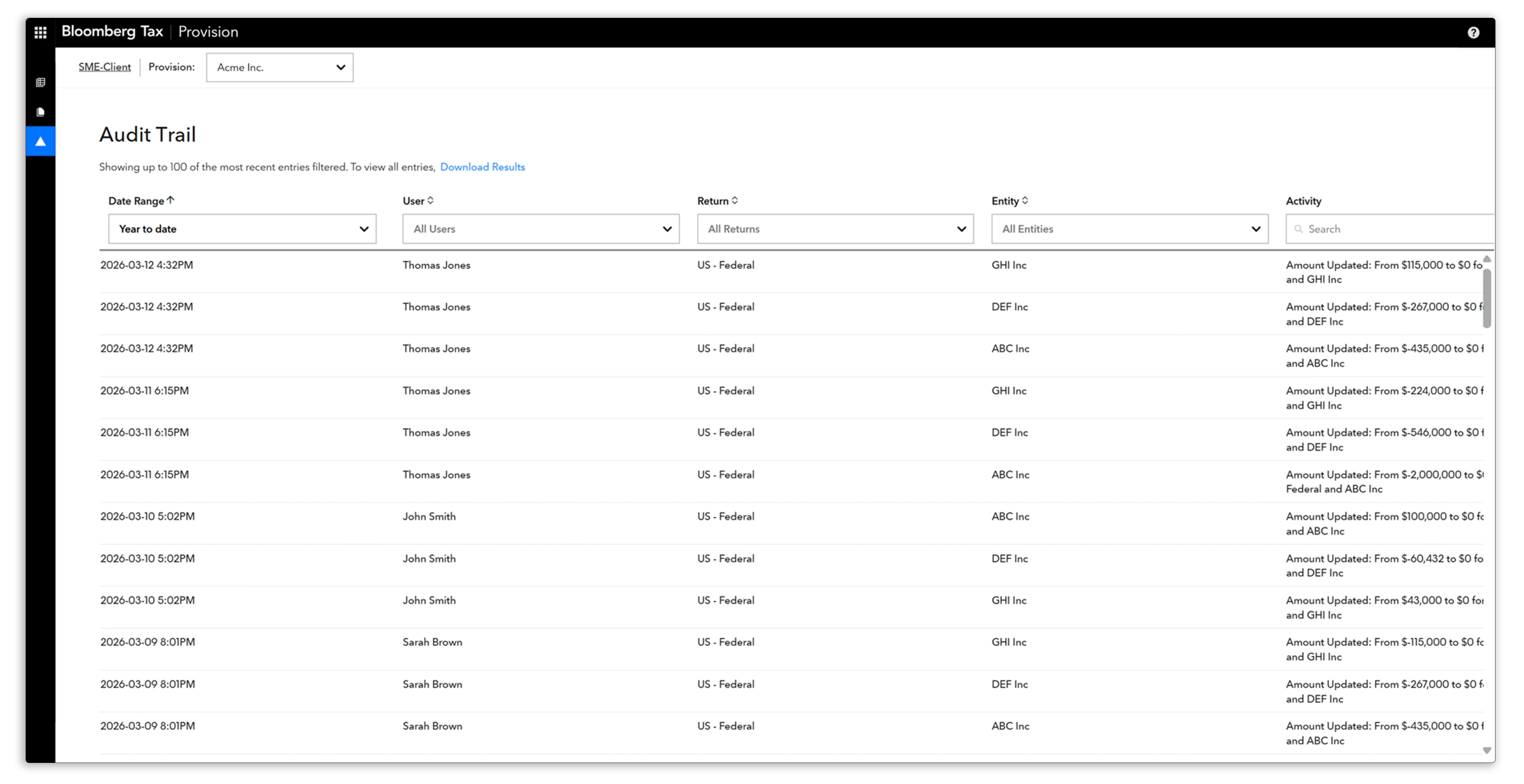
Learn how automated, integrated tax tools can strengthen controls and audit readiness to prevent material weaknesses.
Fixed Assets: Traceable, controlled asset management
Bloomberg Tax Fixed Assets provides time-stamped change records for every modification to the asset register. Locked books and audit-ready reconciliation tools allow tax teams to identify and explain variances across systems.
Customizable, role-based access controls restrict the ability to modify asset data to authorized users, eliminating the risk of inadvertent or unauthorized changes.
And instead of offering inflexible single period views of data, our Open Timeline functionality gives you full asset visibility and control through a holistic view of the asset’s entire lifecycle. With this tool, tax teams can manage asset revisions through an asset’s life while preserving previously reported numbers.
Integration with Bloomberg Tax Workpapers lets tax professionals automate the transfer of depreciation data, replacing the manual extractions and re-entry that is a frequent source of error in the fixed asset-to-workpaper workflow.
See how your team can strengthen controls and improve audit readiness – request a demo of the Bloomberg Tax Suite of Solutions.
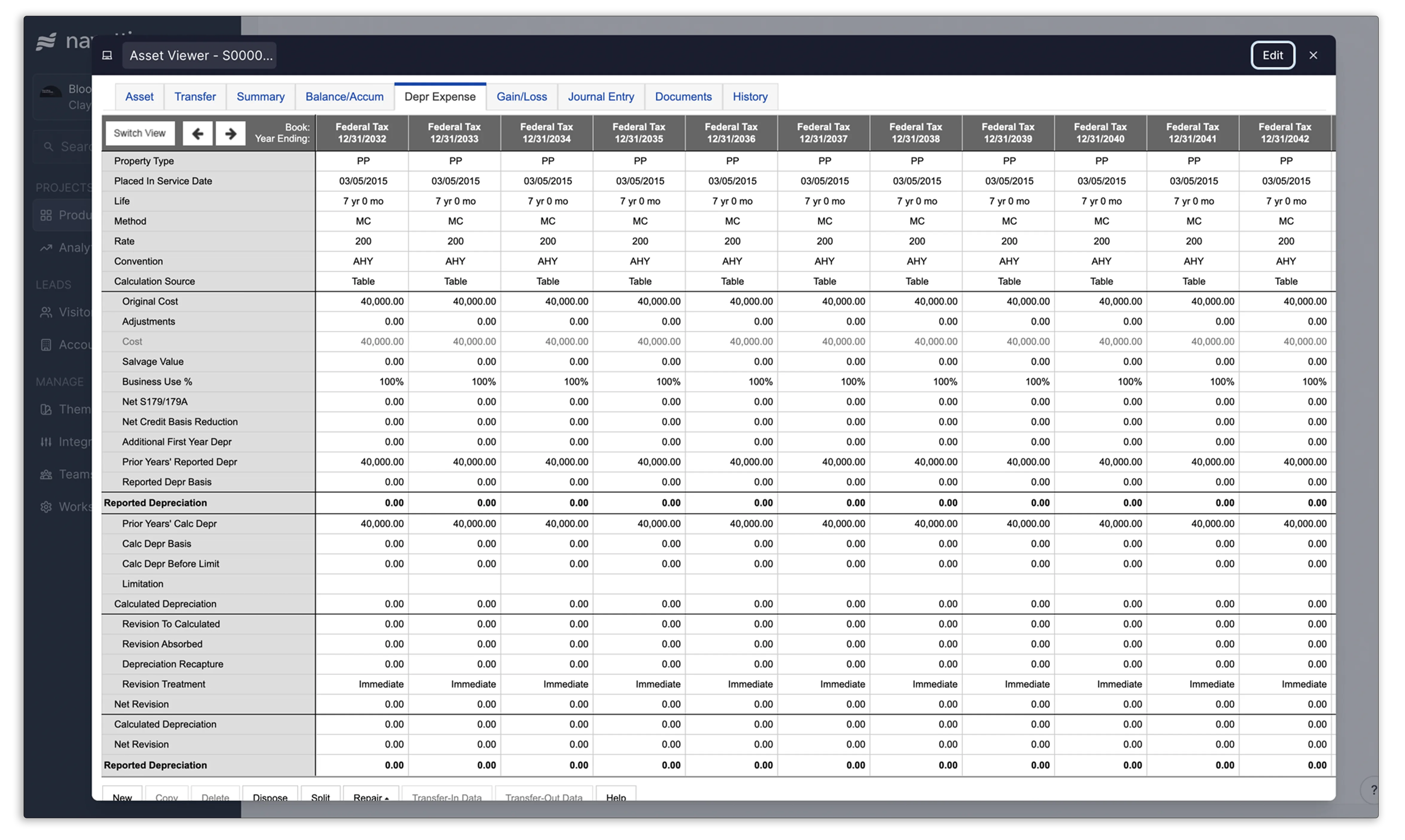
Audit trail tools like Open Timeline on Bloomberg Tax Fixed Assets provide full visibility and control of your data.
The outcome: From control deficiency to board-level confidence
Companies that invest in tools that provide audit-ready support see the following benefits:
- Reduce time and enterprise costs during audits, including by improving operations and processes and allowing for a more efficient audit process
- Lower risk of disputes or restatements
- Enhance credibility with stakeholders, including tax authorities, auditors, and investors
SOX compliance strengthens as system-enforced controls replace reliance on manual, undocumented processes. The risk of surprises during quarter-end or year-end review cycles diminishes as real-time status visibility allows tax professionals to identify and resolve potential issues before they affect financial reporting.
For tax leaders, presenting the audit committee and external auditors with a documented and auditable tax process fundamentally shifts perceptions of the tax function. It moves from being a source of audit risk to an example of financial reporting excellence.
Building audit-ready tax processes at scale
Bloomberg Tax’s integrated suite delivers measurable benefits for tax teams operating under audit scrutiny, replacing manual processes with governed, connected systems that improve accuracy, strengthen internal controls, and provide full audit transparency.
With automated workflows, real-time visibility into process status, and time-stamped audit trails across workpapers, provision, and fixed assets, organizations can reduce errors, streamline close cycles, and respond to auditors with confidence.
The result is a more efficient, defensible tax function that meets the demands of SOX compliance while elevating its role within the business.
Take control of your tax workflows and eliminate material weakness risk – request a demo of Bloomberg Tax’s integrated suite.